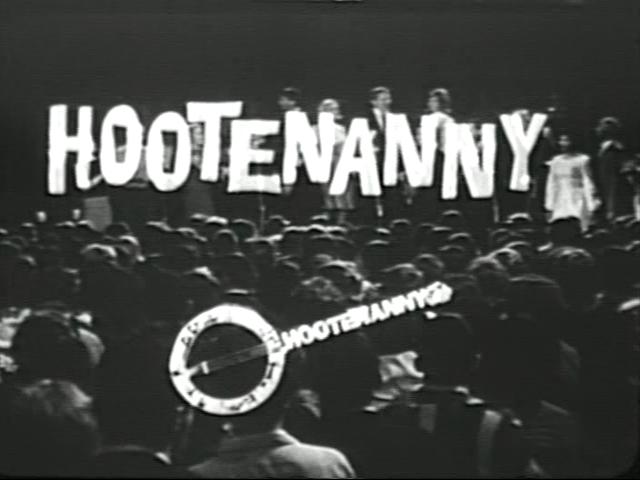
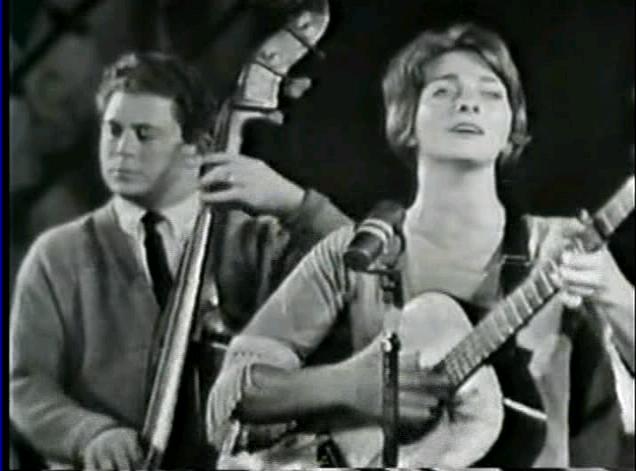
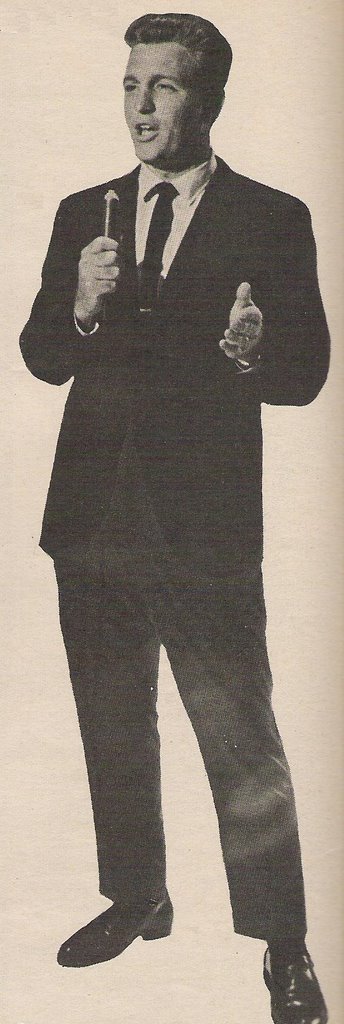
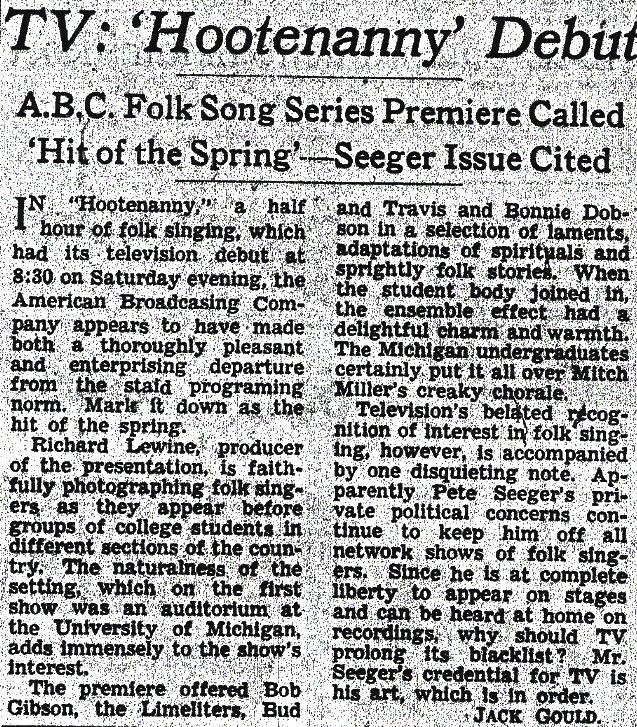
 Hootenanny made its bow on ABC-TV on April 6, 1963. It was a 30-minute show; a fast-track replacement for Fess Parker's Mr. Smith Goes to Washington, a sitcom with neither the wit nor the drawing power of the 1939 Capra film. Hosted by Jack Linkletter (son of Art), Hootenanny was a traveling folk music jamboree, taped at various college campuses across the nation, with students serving as the "studio audience." With the NY Times' Jack Gould labeling it "the hit of the Spring" and the April 13 segment pulling more viewers than the debut, ABC quickly planned to slot Hootenanny into its fall lineup. As the ratings continued to climb, the network opted to expand the show to an hour come September... and a craze was born. Any record label with more than three folk acts signed to it released compilation albums with "Hootenanny" in the title; there may not be a thrift store in all America without at least one of these in its bins. (Labels with fewer than three folk acts simply released "Hootenanny with..." albums.) Two "Hootenanny" magazines were launched: one authorized by
  ABC and edited by Linda Solomon, the other edited by the Times' music critic (and future Bob Dylan biographer) Robert Shelton. FM radio, then on the rise, made its earliest bread-and-butter by programming folk music.
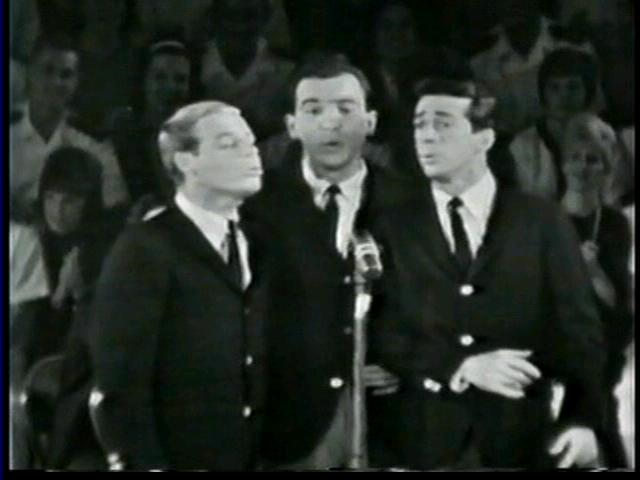
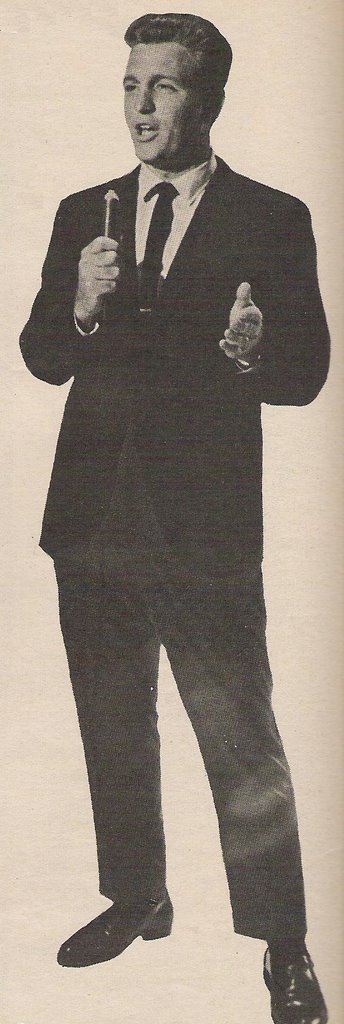
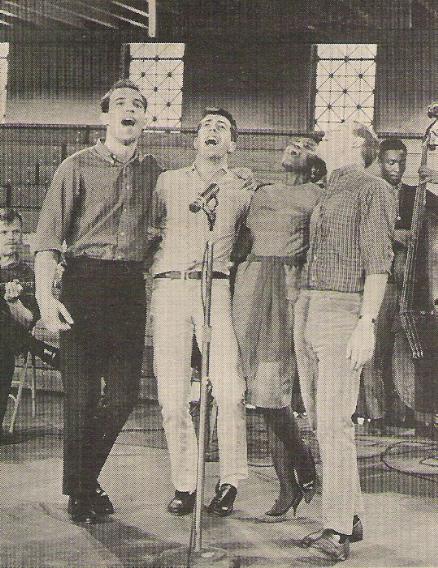
 And what of the TV show? Did it really capture the folk scene in all its earthy splendor? Well, yes and no. To be sure, the emphasis was on the slick and Commercial. Capable as he was, host Linkletter (whose job, according to a producer, was to "report on the proceedings, as if he was covering a sporting event") couldn't help but rub some people the wrong way, especially when his introductions were made over some of the songs. The Limeliters, who are remembered in TV circles as the first group to perform "Things go better with Coca-Cola" in a commercial, headlined 7 of the first 13 segments. Others were toplined by such acts as The Journeymen (fronted by a clean-cut "Papa" John Phillips), The Chad Mitchell Trio (who
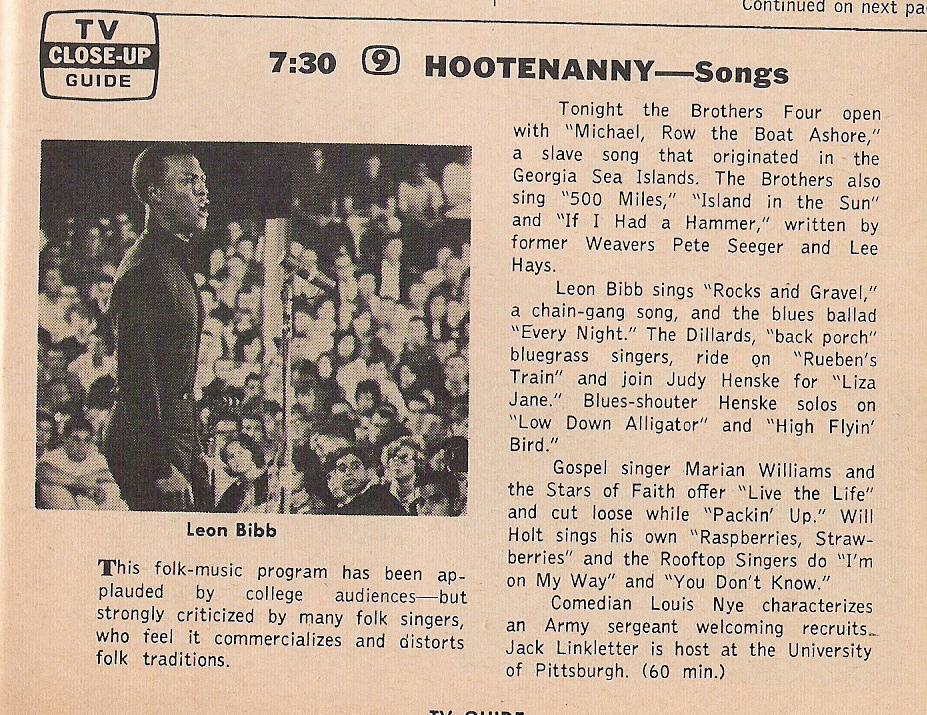
 performed their satirical "John Birch Society," and Pete Seeger's anti-war "Where Have All the Flowers Gone?" and sang with Africa's Miriam Makeba), and Theodore Bikel (whose specialty was Russian and Israeli material). Some traditional (Ethnic) artists were included, such as Bikel, Josh White, his son and Leon Bibb. And the show welcomed many who were equally embraced at the Newport Folk Festival: Judy Collins, The Clancy Brothers & Tommy Makem, Flatt & Scruggs, Bob Gibson, Ian & Sylvia, Oscar Brand, The New Lost City Ramblers, Carolyn Hester and Doc Watson, to name a few.
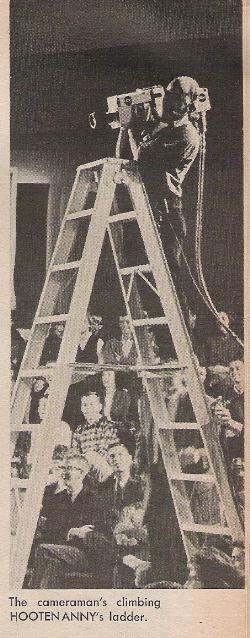
The cameras loved to move around and among the students, capturing them singing along or listening raptuously (and somehow always finding a really attractive co-ed in the process). And there was the clapping. The students were always clapping along, especially to uptempo numbers. One musician told me, "Folk audiences hadn't done that before the advent of Hootenanny... it was really annoying."
 Another annoying aspect for artists was the editorial viewpoint of the producers. Not so much in censoring topical or anti-war songs, as that was tolerated - particularly in the case of The Mitchell Trio, who were permitted to sing some (but not all) of the protest and satiric material that wasn't getting radioplay. Rather, songs were edited for time - so that the space between commercials was filled with "complete" performances. Other songs had their "hells" and "damns" removed from the lyrics, and when Judy Collins was handed a revised lyric to "Anathea" - one which changed the song's villian to a "righteous" man - she refused to sign for future appearances and advocated an artistic - rather than political - boycott.
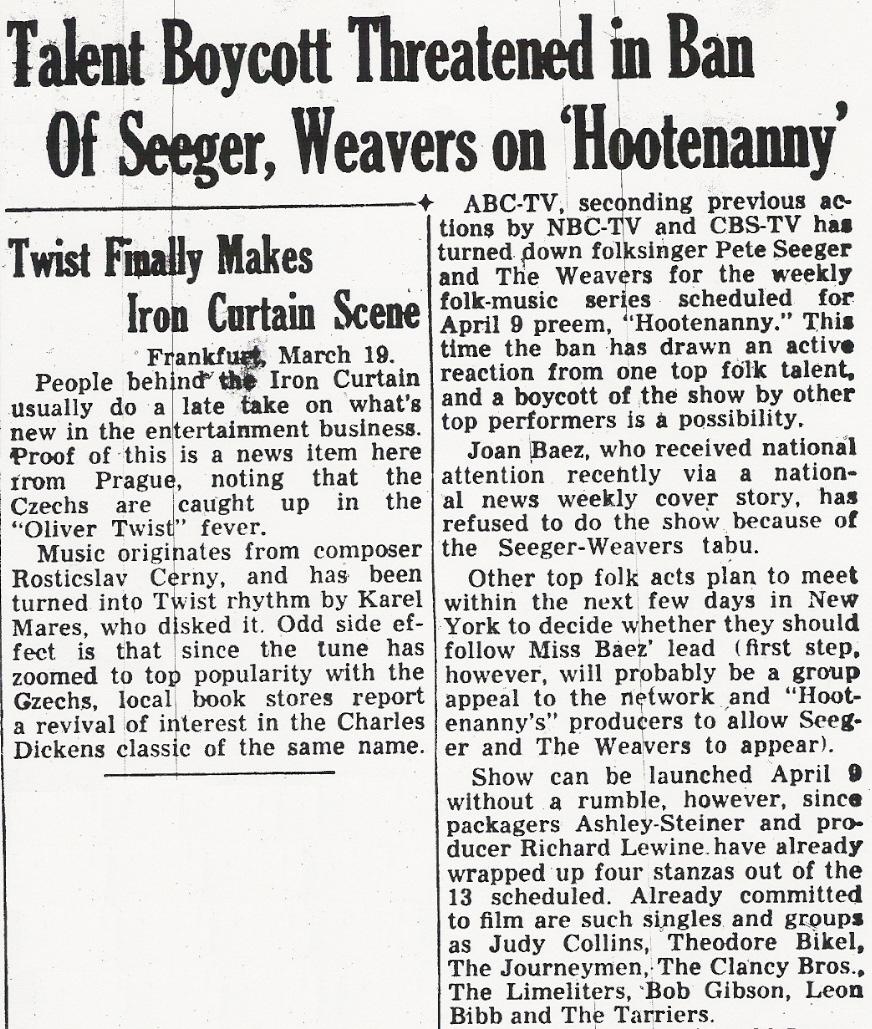
When the show expanded to an hour, ABC brass decided it would be wise to invite Seeger to appear... provided he sign a loyalty oath. Naturally Seeger refused to be singled out for this treatment, and when his manager made the story public, artists that had originally appeared on the 30-minute version refused to return. That left the network with a longer running time for a dwindling talent pool.
 To compensate, jazz and country & western musicians were added, and a spot was set aside for stand-up comedians (Bill Cosby made his network TV debut on Hootenanny and Woody Allen was a particular favorite).
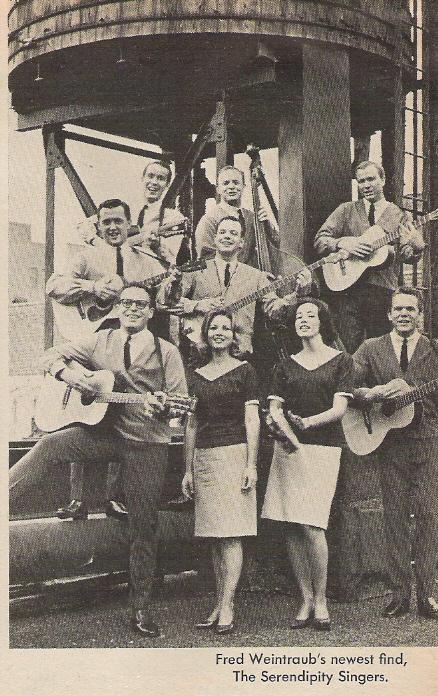
Hootenanny continued to draw an audience... for awhile. Scheduled against The Jackie Gleason Show, it managed to keep The Great One out of the Top 20 Nielsens for the first half of the season. But it wasn't long before repetition began to creep in. The New Christy Minstrels, The Serendipity Singers (who were discovered by the show's talent coordinator, Fred Weintraub) and The Brothers Four - Commercials all - each appeared on eight segments. Certain songs kept turning up: The Brothers Four and The New Christy Minstrels each did "Michael, Row the Boat Ashore." The
 Wanderers 3 opened a show with "Roll Along," as did the Travelers 3. The Chad Mitchell Trio and The Brothers Four each closed a show with "Four Strong Winds." And so on.
Finally, the death knell for Hootenanny - and the entire folk craze - was sounded on February 9, 1964, when The Beatles invaded via The Ed Sullivan Show. That was the turning point in popular music. College audiences may not have immediately embraced the British Invasion, but musicians sure did. It wasn't long before folkies like John Phillips, Cass Elliot, Gene Clark, John Sebastian, Barry McGuire, Carly Simon and Jerry
 Yester - all of whom had appeared on the show - would discover the joys (and sorrows) of rock stardom. And Hootenanny would give way to Shindig on ABC in the fall of '64.
Yet the music does continue. Bruce Springsteen is touring now in support of an album of Pete Seeger covers. Folk Alley (www.folkalley.com) keeps a 24-hour stream of acoustic music going through listener support. The World Folk Music Association (www.wfma.net) aspires to keep folk traditions alive throughout the globe... yet when they put on their annual fund-raising concert, it's The Kingston Trios and The Limeliters and The Brothers Fours to which they turn for the crowd. And it's a crowd consisting of more than a few who remember - and still miss - Hootenanny.